German Evaluation – References
1 Beate Bahner: https://sputniknews.com/europe/202004151078965780-beate-bahner-coronavirus-arrested/

1 Beate Bahner: https://sputniknews.com/europe/202004151078965780-beate-bahner-coronavirus-arrested/
1 One of the earliest, important Covid-19 whistleblower videos up until today! Dr. Dan Erickson & Dr. Artin Massihi https://videos.utahgunexchange.com/watch/the-most-important-covid-19-whistleblower-video-up-until-today-dr-dan-erickson-dr-artin-massihi-mp4_CPWhQPxnRSXIa4P.html
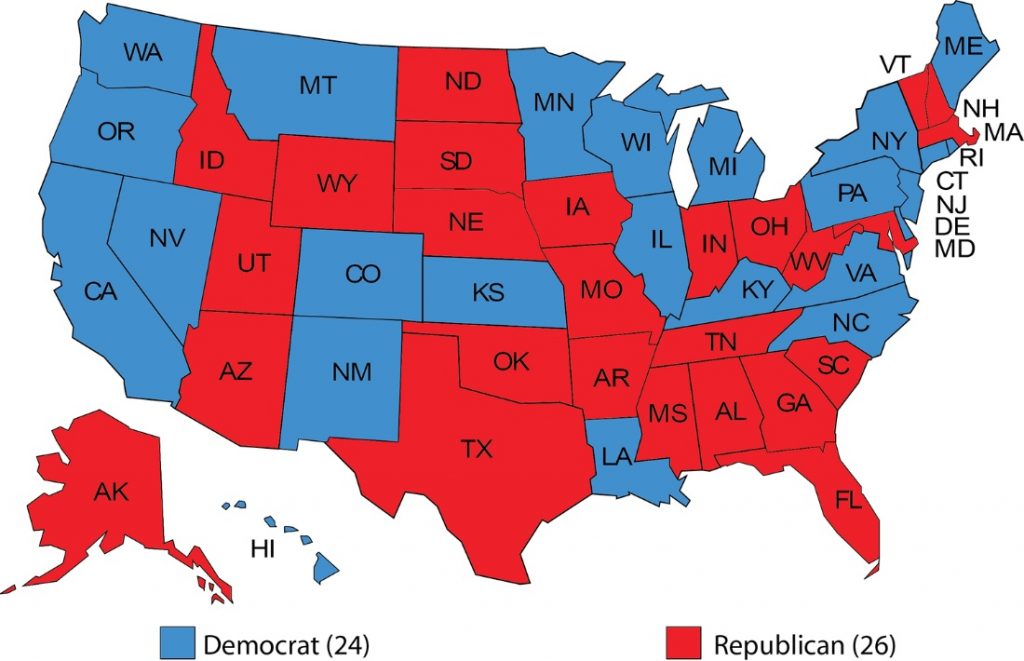
1 https://centerforpolitics.org/crystalball/articles/the-governors-party-control-now-near-parity/
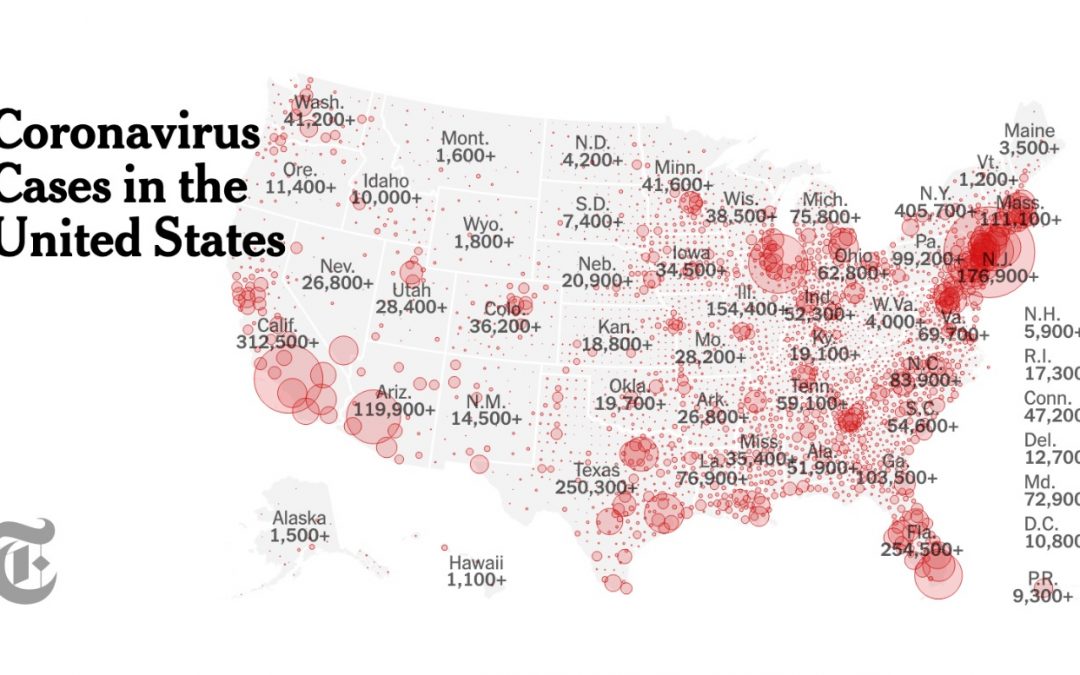
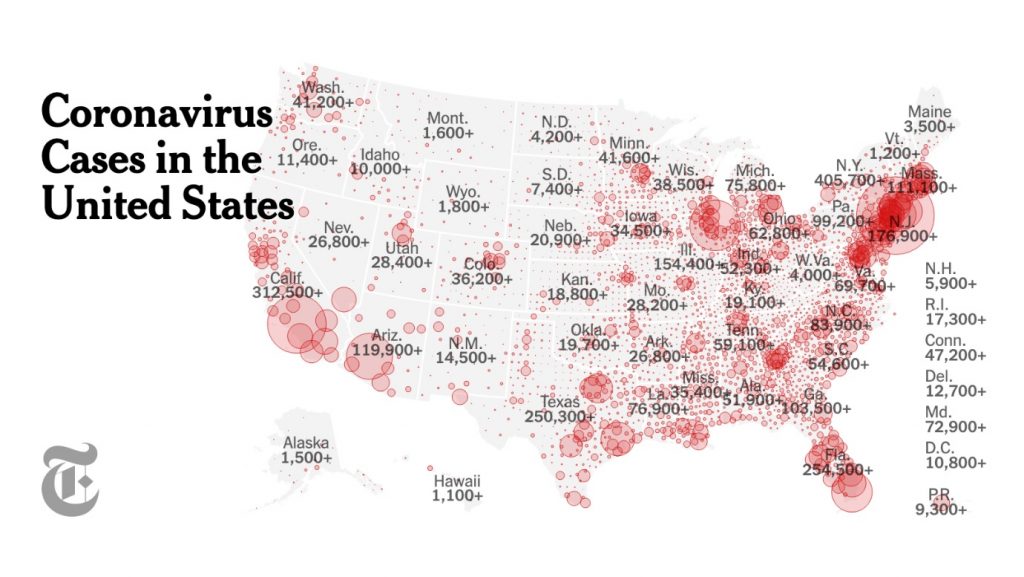
2 https://www.nytimes.com/interactive/2020/us/coronavirus-us-cases.html
Prof. Dr. Johan Giesecke shares some more of his insights: Johan Giesecke – Wikipedia
Sweden showed the world intellectual self-confidence. Instead of eagerly going into a state of emergency, they did not stop flights or close borders, and they kept normal city life. They recommended social distancing, and for those over 70 of age to stay in self-quarantine. They treated adults as grown-ups with their health being at least partially their own responsibility.
They prohibited public events from 50 people on, but when it should happen spontaneously, police cannot stop people and ask them a justification, no fines were given. As a nation, they show common sense and individual responsibility, and a strong tendency to follow recommendations, something which cannot be expected when people have no confidence in their political leaders.
Administrative independence allows less room for arbitrary decisions, and no overruling by politicians, who do things for other than scientific reasons.
Sweden valued the Hippocratic oath, do no harm. With no expected better health outcome, a lockdown makes all sectors related to export suffering tremendously. For the health of the social security in the long run domestic economy must thrive. Where many other countries that went in a severe lockdown have built up a huge debt, Sweden is one of the few nations that did not made a terrible loss on their Gross National Product.
Sweden has decided that they can’t defeat the disease by killing the patient.
Most people who died in Sweden were close to Sweden’s average life expectancy, and there was little excess mortality. So, most should have died anyway, but there was always attending enough health professionals, unlike in ‘fascist’ countries that put people aside to die. Is that protecting the vulnerable?
Restricting freedom might be useful during pandemics but only when there are good reasons to assume that this will help in the long term. Those reasons are not there, at least not with this virus, which is not too horrible, aka a combo contagiousness and mortality. You cannot play hide-and-seek with this virus; you must confront it. Lockdowns hurt societies without any health benefit.
What did flatten the curve in Sweden were no lock-down was imposed ?
Prof. Dr. Johan Giesecke :
First immunity, and the other is that the people who are frail and old will die first and when that group of people is sort of thinned out you will get less deaths. That’s why the old and vulnerable people needed to be taken extra care of, not the rest of the healthy people. It is hard to ascertain that this category of people was usually not protected at all, which explains the high numbers of victims in the rest homes.
The flattening of the curve is due to the most vulnerable dying first, the results will eventually be similar for all countries. Covid-19 is a mild disease, similar like the flu and only deadly for certain high-risk patients that already suffered from heart-lung disease and/or impaired immunity.
It was just the novelty of the disease that scared people. The actual fatality rate of Covid-19 is in the region of 0.1%, and at least 50% of the population of both the UK and Sweden will be shown to have already had the disease when mass antibody testing becomes available.
The more we hear experts like this, the more the official narrative and actions seem blatantly counter-productive.
What has happened to our politicians, and our media? When will an interviewer ask intelligent questions again? And react to what the interviewee said, when deciding the next Q to pose, instead of following the direction of an editor in their earpiece.
‘Countries that start their exit strategy will have some other deaths that we had already. As the disease passes through the population, are we gonna see second and third spikes?
The increasing number of deaths will be part of checking which strategy should be kept temporally and which could be loosened.
When I first heard about the different draconic measures that were taken, I asked myself how are they going to climb down from that? When will they open the schools again, and what should be the criterion to open schools? Did anyone of those seemingly strong and very decisive politicians think about how to get out of this when they introduced it?
In one thing that most governments were honest and correct regarding the measures that have been taken, was the fact they stated that it was much easier to impose a sudden lock down than to re-open everything gradually in function of the “needs” and “risks”.
It’s difficult of course for the authorities to admit now that all those severe lockdown and quarantine measures, they’ve imposed were ‘exaggerated’ and were not really needed; they would lose face too much and even so their credibility among their voters.’
I think that the difference between countries would be quite small in the end so that you don’t think that the severity of these intervening measures are gonna make that much difference
I think what we’re seeing is a tsunami which is sweeping over Europe and some countries do this and some countries do that, and, in the end, there will be very little difference.
This virus is usually quite mild, most people who get it will never even notice they were infected.
The actual fatality rate of this diseases is much lower than the numbers that have been talked about, much much lower!
I think it would be like a severe influenza season, in an order of 0.1 to 0.5 percent maximum.
The whole sort of rationale for introducing these lockdowns across Europe that has created such unbelievable side-effects, and pretty much stops the whole world in its tracks, is a misguided policy that’s doing more harm than good.
Theoretically you could say that the very weakest people who would die in a few months are dying now if there is no lockdown, and if they are not protected. The correct policy from the start should have been to shield old and vulnerable groups. Then we wouldn’t have to deal with the effects of the lockdown…
One major result is the dictatorial trends which pop up in more established democracies.
Although there is an enormous amount of public support for it, it is still potentially dangerous if they take away constitutional rights. A new disease, with a lot of people that seem to be dying from it, you don’t know really what will happen. This fear of contagion demands political strength and decisiveness. But do you think you could keep the lockdown and protecting the old people until we have good drugs and good vaccines six months, a year, 18 months from now? I think people would get a bit tired of it, even if they support the policy.
I think it will be like a severe influenza. When the flu comes, we all say oh, the flu is coming like every winter. It usually kills in this country around up to 2,000 people, but it’s normal, its influenza, we have it every year. And they’re old and they’re going to die soon anyway, so no one is very upset about influenza. But corona? Hell no!
The Swedish laws on communicable diseases are mostly based on voluntary measures, or individual responsibility. It clearly states that the citizen has the responsibility not to spread a disease. This is the core we started from, because there is not much legal possibility to close down cities in Sweden using the present laws. Quarantine can be contemplated for people or small areas, such as a school or a hotel. But [legally] we cannot lock down a geographical area.
It is difficult to talk about the scientific basis of a strategy with these types of disease, because we do not know much about it and we are learning as we are doing, day by day. Closedown, lockdown, closing borders — nothing has a historical scientific basis, in my view. We have looked at several European Union countries to see whether they have published any analysis of the effects of these measures before they were started, and we saw almost none.
Closing borders, in my opinion, is ridiculous, because COVID-19 is in every European country now. We have more concerns about movements inside Sweden.
As a society, we are more into nudging: continuously reminding people to use measures, improving measures where we see day by day that they need to be adjusted. We do not need to close down everything completely because it would be counterproductive.
How does the Swedish Public Health Agency make decisions?
Around 15 people from the agency meet every morning and update decisions and recommendations according to the data collection and analysis. We talk to regional authorities twice per week.
The big debate we are facing right now is around care homes for older people, where we registered very unfortunate outbreaks of the coronavirus. This accounts for Sweden’s higher death rate, compared with our neighbours. Investigations are ongoing, because we must understand which recommendations have not been followed, and why.
We underestimated the issues at care homes, and how the measures would be applied. We should have controlled this more thoroughly. By contrast, the health system, which is under unusual pressure, has nevertheless always been ahead of the curve.
We know that COVID-19 is extremely dangerous for very old people, which is of course bad. But looking at pandemics, there are much worse scenarios than this one.
As soon as the severity of the lockdown, quarantine and asocial distancing corona-measures were deployed, a lot of pharmaceutical industries as well as research groups of all kind (private and governmental) started to investigate the development of a vaccine in which the hope was sold to be able to return to our normal lives.
It was to be expected from the very beginning that there would be lobbying for certain vaccines by certain shareholder groups. Indeed, the fact that the covid-19 vaccines from Pfizer-BioNTech and Moderna were the first to be approved speaks for itself. Both pharmaceutical concerns are mainly controlled by the same share holders1 such as the Vanguard group, Blackrock Inc., State Street Corporation and Geode Capital Management.
Moreover, the vaccines from both Pfizer and Moderna are based on completely new mRNA technology. Classic vaccines do contain parts of the virus protein capsid to which the body raises antibodies that should recognize the virus when it enters the body.
The mRNA vaccines have another mode of action: a part of the genetic code of the virus -that encodes for certain of those capsid proteins- is injected. The mRNA enters in the cell and the latter will use this mRNA template to assemble these viral capsid proteins, to which also antibodies can be generated.
The possibility mRNA vaccine technology2 is not new as such, it has been studied since the early nineties, but it has always been pushed back by all kind of regulatory commissions because of the safety concerns, especially on the long term.
What if the mRNA integrates in the cell and persists there, forcing the cell to create viral proteins for the rest of your live? Can it lead to new diseases? How will the immune system be affected by this technology on the long term? Can it lead to a new kind of auto-immune diseases3?
These long-term effects are UNKNOWN YET which makes this vaccination program one of the biggest experiments in the pharmaceutical history. If the blunting corona measures already killed half of your brain, please feel free to volunteer in this gigantic clinical trial by betting the remainder of your brain hemisphere.
The corona-crisis can at least be regarded as an insurmountable opportunity to have the mRNA technology forced through all kind of boards and committees to get emergency approval for human use, the “urge” for whatever vaccine was high enough to pass the green light.
The mRNA vaccines are “Conditional marketing authorization granted4” which basically means a quick authorization to accelerate the approval with respect to the necessity for human healthcare.
Necessity knows no law, except the “follow the money”-law. The economic model behind those mRNA vaccines is quite interesting; not for you as an individual, but for the shareholders of the vaccination industry of course. Even the fact that the storage costs of this type of vaccines is much higher (since RNA molecules are quite unstable and must therefore be stored at -80°C), the general profit is huge compared to classic vaccines.
Besides RNA stabilizing agents (like PEG5 which are also a source of concern), the mRNA vaccine does contain not much more than a part of the RNA of the coronavirus. More specifically the part that is needed to build the capsid protein that binds to certain cell surface molecules in your body. Thereby the virus wall components need to be assembled using recombinant DNA techniques in cell cultures and purified therefrom.
Using a part of the mRNA directly extracted from whatever virus and amplified (also by PCR techniques), one can bypass a couple of expensive steps in the vaccination production process.
For the time being, the vaccine manufacturers claim their product is still effective against virus mutations that popped up by the end of 2020, such as the so-called British and South-African mutations.
When the virus mutates beyond the point that the current vaccines are no longer working effectively, (and they will!), mRNA vaccine manufacturers already claimed they could generate an adapted vaccine in only 6 weeks, if necessary. The amazing advantage of mRNA vaccines lies in the fact that when a mutated corona-strain pops up, it’s way much faster and easier and -most important- much cheaper to manufacture a new adapted vaccine towards the new strain; thus, enabling much more profit for the vaccination industry.
Finally, this is exactly what the vaccination industry wants: to produce each year a new type of vaccine adapted to the seasonal corona virus of that time, and this with a minimum of costs! Extreme huge profits can be made each year again! And now these vaccines are relatively cheap, but they will increase in price year after year. And people will be willing to pay for it either out of fear or because it will be necessary to regain some of our freedom (such as traveling).
To give you an idea about the profit margin: the cheaply produced mRNA vaccines do cost about 4 to 5 times less than the AstraZeneca vaccine which is produced using the classic (expensive) way6
As we’ve already predicted, more than 100 research groups are trying to develop a corona-vaccine, but only few will get final approval, and it’s more or less defined which ones.
Countries like China and Russia which are less dependent from the WHO than most western countries, will get their own vaccine but it’s doubtful if they will get approval for the US and European market.
1 The History of the mRNA Vaccines – The History of Vaccines
2 mRNA Vaccines Might Prove Catastrophic in a Rushed Coronavirus Response – NewsWars
3 BioNTech Says Can Make Mutation-Beating Vaccine In 6 Weeks (ndtv.com)
6 How the top 3 COVID-19 vaccines compare, in one chart (businessinsider.com)
‘Conditional marketing authorization granted.’
It is important to know what that means.
Therefore, below is the explanation of this term from the website of the European Medicine Agency (EMA).
|